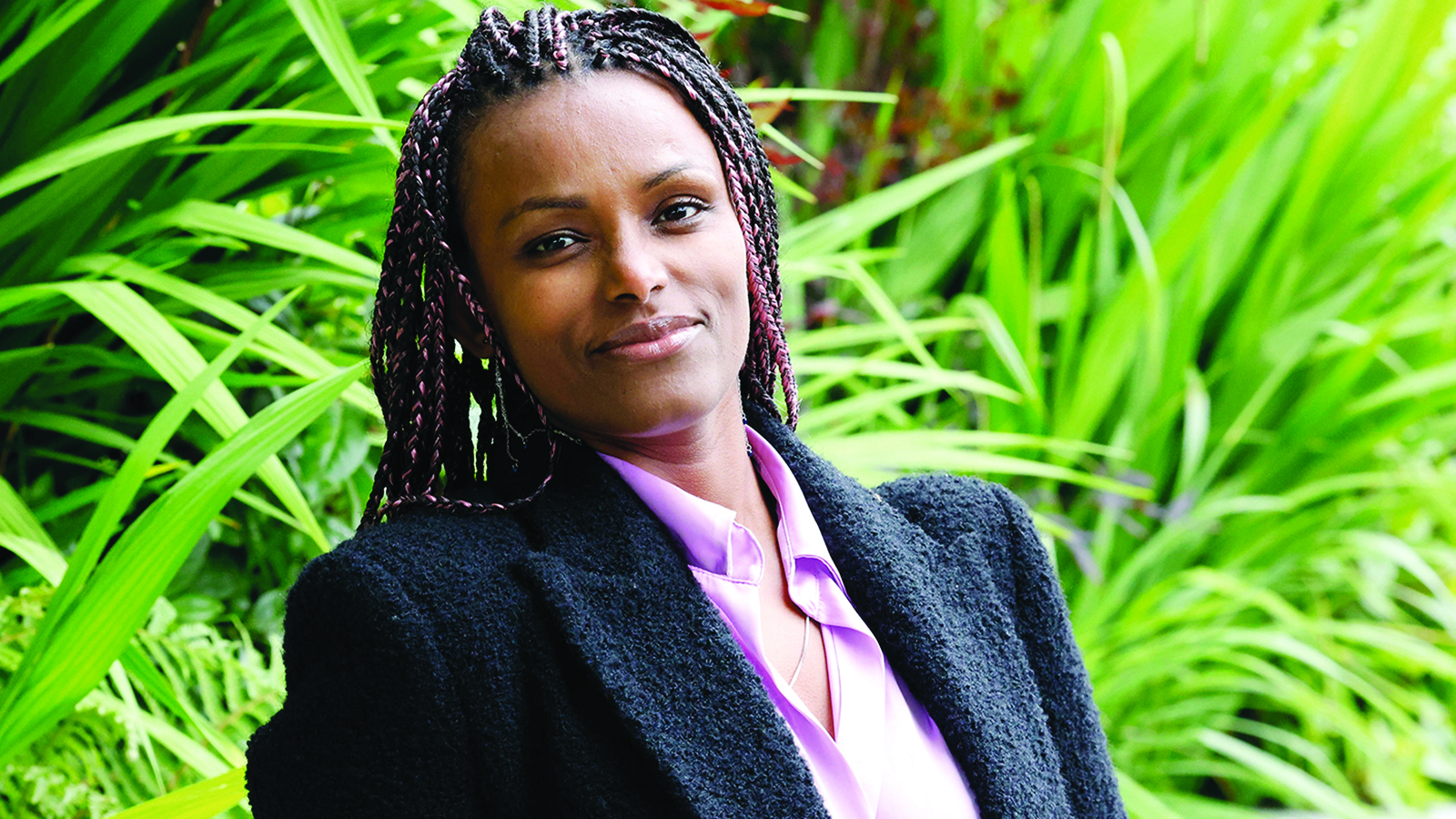
Abeba Birhane is an Ethiopian-born cognitive scientist whose pioneering research and advocacy have placed her at the forefront of innovation in AI. Rooted in the disciplines of cognitive science, machine learning and social justice, her work challenges the foundations of how this rapidly evolving technology is built, governed and deployed.
Born in Ethiopia, she moved to Ireland for her advanced studies, earning a PhD in cognitive science from University College Dublin (UCD) in 2022. But Birhane first came to global attention for her ethical AI research when she uncovered rampant misogynistic and racist data labelling in a commonly used image dataset back in 2020. She exposed how large-scale image datasets – such as 80 Million Tiny Images and ImageNet used in developing AI systems – carried deeply problematic labels, offensive content and embedded discriminatory biases.
Her critique of algorithmic bias and the notion of “algorithmic colonisation” has become foundational for the field of AI ethics, especially in how AI exacerbates rather than alleviates structural injustice. This early scholarship earned her global recognition, including being named to the inaugural TIME 100 AI list in 2023. Then, in November 2024, came another significant milestone. Trinity College Dublin announced the founding of the AI Accountability Lab (AIAL), under Birhane’s leadership. The lab, housed within the ADAPT Research Ireland Centre at Trinity, secured funding of nearly €1.5 million from partners that include the AI Collaborative, Luminate and the MacArthur Foundation.
AIAL is dedicated to interrogating the entire AI ecosystem – from data collection and training sets, through model deployment and governance – to ensure accountability, transparency and justice. At its core is Birhane’s vision of an AI that centres marginalised voices, resists capture by big-tech and corporate power, and puts public interest before profit.
During 2024, Birhane also contributed directly to policy and oversight. In February that year, she submitted a formal opening statement to the Irish parliament on the risks associated with facial recognition and surveillance technologies, highlighting how misclassification disproportionately harms Black people and other marginalised groups. She also joined Ireland’s AI Advisory Council in its inaugural phase, advising national AI policy and regulation efforts.
In 2025, Birhane’s impact deepened. In June, her lab, AIAL, was awarded a €199,978 grant from the European AI & Society Fund (EAISF) “Making Regulation Work” programme, enabling development of a justice-oriented audit framework for AI systems integrating computational methods, regulatory theory and social justice. This project underscores Birhane’s unique strength, one of bridging technical audit work, ethical theory and real-world governance.
Also in 2025, her research team published a landmark paper in Nature titled “Computer-vision research powers surveillance technology” (Kalluri et al., 2025) in which Birhane is a co-author. The paper made headlines, demonstrating how pervasive surveillance of people is being used to access, monetise, coerce and control. It called for a rigorous independent audit of models and datasets. Birhane represented Trinity at the World Meeting on Human Fraternity at the Vatican in September 2025, joining global AI thought-leaders in issuing a declaration on “red lines” for AI development.
In a moment when AI is being rapidly adopted across sectors, Abeba Birhane’s work reminds us how vital it is that innovation is led with responsibility and accountability. Her leadership demonstrates not only scholarly excellence but transformative institutional and policy impact. She is an inspiration for how the next generation of technology leaders can combine rigorous research, social justice and design of systems that are democratic, fair and work for the many, not the few.